
All The Right Tools
Appareon works with the most widely used advertising platforms and analytics tools to market your business, generate leads and optimize your advertising results


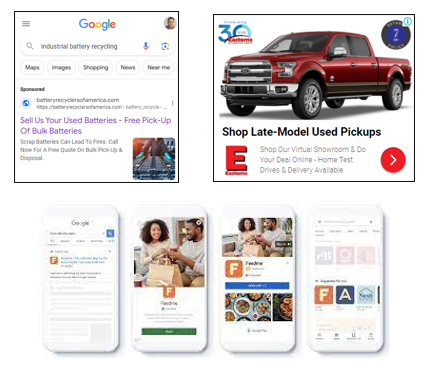
Google Ads allows businesses to display ads to users who are searching for relevant products or services on Google’s search engine or browsing relevant websites in Google’s Display Network. Google currently has over 90% of the US search market, and its display network offers clearances on over two million different website and apps.
Ad types eligible for Google Ads include:
Search Ads
Display Ads
Video Ads
Shopping/Product Listing Ads
App Promotion Ads
Lead Generation Ads
YouTube, owned by Google, reaches 120 million viewers in the US. This video ad platform allows businesses to drive video brand awareness with TV-sized audiences while targeting advertiser messages to reach specific demographics, interests, and behaviors.


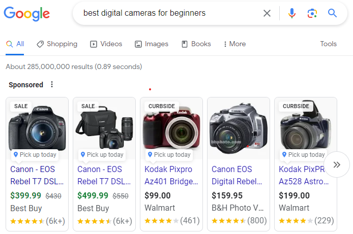
Shopping ads, also known as product listing or catalog ads, allow retailers to showcase their products to potential customers who are actively searching for them. Seen as an alternative to online retail sites such as Amazon, shopping/catalog ads appear at the top of a search results page, making them highly visible to users who are searching for products.

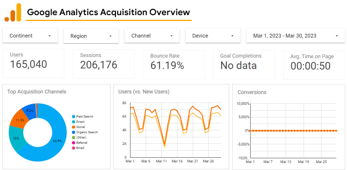
Google Analytics (GA) is a web analytics service that tracks and reports on website traffic. It allows website marketers to gather data about the behavior of their website visitors, such as where they come from, how they found the site, what pages they visit, how long they stay on the site, and more.
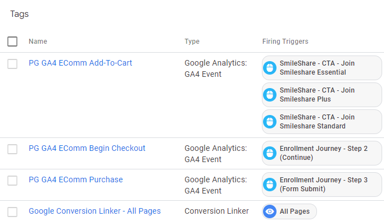
Google Tag Manager (GTM) is a free tool from Google that simplifies the process of adding, updating, and managing tracking tags on your website, making it easier to measure your website’s performance and improve your marketing efforts.


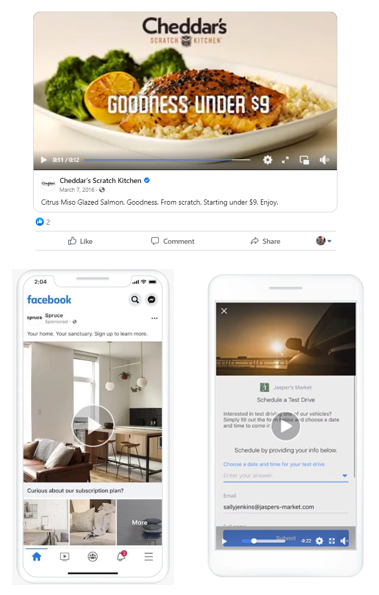
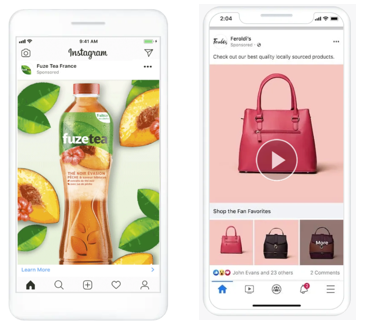
Facebook is the largest social media platform in the world with over 195 million daily users in North America. Facebook’s targeting is primarily based on user demographics, interests, and behavior.
Facebook ads most often appear in a user’s news feed, which includes content and posts on subjects and people with whom the user chooses to connect or follow
Facebook offers a variety of ad formats that businesses and advertisers can use to reach their target audience, including:
Image/Display Ads
Carousel Ads
Video Ads
Shopping/Product Catalog Ads
Lead Generation Ads

Aimed at a younger audience, Instagram is designed as a mobile-first experience with an interface that is more streamlined and focused on a visual experience using photographs and videos. Instagram reached 120 million US users.
Instagram ad formats include:
Image/Display Ads
Carousel Ads
Video Ads
Shopping/Product Catalog Ads
Lead Generation Ads


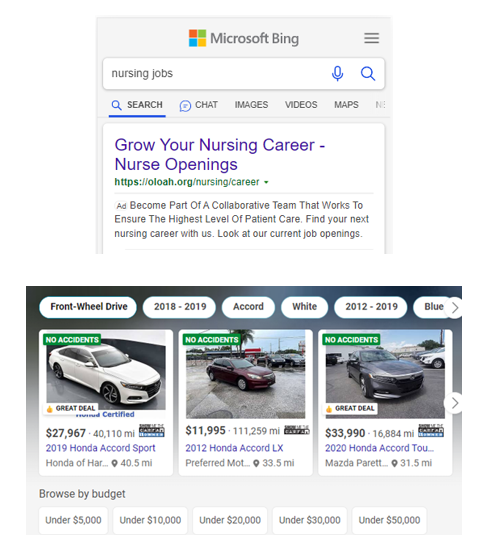
Bing Advertising, also known as Microsoft Advertising, is an online advertising platform accounting for roughly 5.5% of all U.S. Internet searches. Because Bing Ads has less competition than Google Ads, the cost per click (CPC) is often lower, making it a more cost-effective option. Bing recently introduced AI as a part of it search engine results to provide more useful responses.
In addition to search advertising, Bing’s network also includes access to other Microsoft-owned properties such as LinkedIn and MSN.com, and allows several types of ads to run across its ad network including:
Search Ads
Display Ads
Video Ads
Shopping/Product Listing Ads
App Promotion Ads
Lead Generation Ads

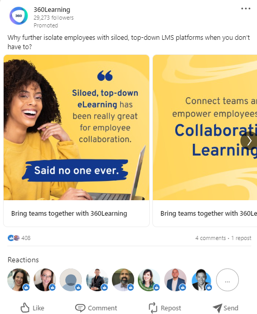
LinkedIn primarily focused on professional and career-oriented activities with 171 million users in the U.S. The social network is most effective when promoting B2B product offerings, allowing advertisers to target specific demographics such as job title, industry, company size, and location.
LinkedIn ad formats include:
Text Ads
Display/Image Ads
Carousel Ads
Video Ads

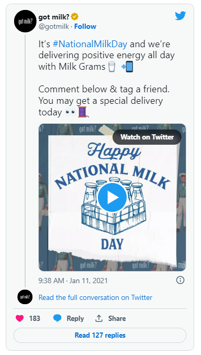
Advertisers pay to promote tweets, along with running video ads and display ads to drive users to click through to the advertiser’s website.
Text Ads
Display/Image Ads
Video Ads
App Install Ads

Having run both a major ad agency and launched a startup online business, I appreciate the time Appareon takes to connect advertising spend with business results. Their ability to identify what’s affecting current performance, coupled with a deep understanding of conversion rate optimization, allows Appareon to deliver improved lead and sales performance for its clients along with a stronger return on ad spend.
 Learn More About Ad Types
Search Ads
- Also referred to as Search Engine Marketing (SEM) or Pay Per Click (PPC).
- Search Ads work on a model where advertisers bid on specific keywords or phrases relevant to their business. When a user searches for those keywords, the ad is displayed alongside the search results, and the advertiser is charged when the user clicks on the ad and visits their site.
- Search ads are highly effective with users currently searching for the type of products and services your business offers. As a result, they tend to convert more quickly given their interest.
Display/Image Ads
- Display ads contain images and graphics making them more visually appealing than text ads alone.
- Display ads can appear across many websites that carry ads (such as ESPN & CNN) – allowing display advertising to expose their brand to those who may not be familiar with their company but are nevertheless in-market for the types of products and services offered.
- Display ads are often used to inexpensively retarget users who may have visited an advertiser’s website but have not yet made contact or a final purchase decision.
Video Ads
- Also called OTT advertising, which stands for Over-The-Top, this refers to TV/Video ads that are streamed via the internet rather than by traditional antenna, cable or satellite delivery.
- 78% of U.S. households can now receive ads through OTT streaming services. In addition to viewing ads on TV sets, video ads can also be consumed on mobile devices and computers appearing on thousands of websites that accept video ads.
- Unlike traditional TV ads, digital video ads can be targeted to in-market customers who have already started searching online for your products and services.
Carousel Ads
- Carousel ads are designed to showcase multiple images or videos within a single ad unit, allowing advertisers to tell a more engaging and interactive story.
- Carousel ads consist of two or more scrollable cards that users can swipe or click through horizontally. Each card typically contains an individual image or video, accompanied by a headline, caption, and a call-to-action button. The cards can be customized to display different content, such as product images, features, benefits, or a sequential narrative.
- Carousel ads are a type of online advertising format commonly used in social media platforms, such as Facebook, Instagram, and Twitter.
Shopping/Product Catalog Ads
- Shopping ads, also known as product catalog or listing ads, allow retailers to showcase their products to potential customers who are actively searching for them.
- Shopping ads are seen as somewhat of an alternative to online ecommerce sites such as Amazon and online listing sites such as Cargurus. Advertisers can upload their product catalog which appear at the top of results page, showing users products that specfically match the search performed by the user.
- Shopping ads use a range of data points including the user’s search query and location. This helps ensure that the right people are seeing your ads, leading to higher conversion rates and a better return on investment (ROI).
Lead Generation Ads
- Lead generation ads can collect contact information directly on the ad itself by utilizing lead forms or instant forms. These forms are embedded within the ad unit, allowing users to submit their information without leaving the platform or being redirected to an external landing page. This streamlined process increases convenience for users and improves conversion rates.
- Within the ad creation process, advertisers configure the lead form or instant form. They specify the fields they want to collect, such as name, email address, phone number, company name, or any other relevant information. They can also include custom questions or checkboxes for additional data gathering or qualifying purposes.
- The contact information submitted through the lead form is captured and stored in a database or sent directly to the advertiser. Advertisers can access this data for further follow-up, such as sending personalized email campaigns, initiating phone calls, or integrating the leads into their CRM system.
App Install Ads
- App install ads are an effective way for app developers and marketers to reach a wider audience, increase app downloads, and drive user acquisition. They leverage the targeting capabilities of advertising platforms to reach specific user segments, such as demographics, interests, or device types.
- App install ads, also known as mobile app install ads, are a type of advertising campaign designed to promote the installation of a mobile application on users’ devices. These ads are commonly used on various platforms, including social media networks, search engines, and mobile ad networks.
- The app install ad includes a clear call-to-action button, such as “Install,” “Get,” or “Download.” When users click on the call-to-action button, they are directed to the respective app store for their device’s operating system (e.g., Apple App Store for iOS, Google Play Store for Android). If users decide to install the app, they can click the “Install” or “Download” button on the app store page.